

Mortise lock
SARGENT 8200
A family to check when a commercial door has an existing mortise pocket. Confirm function, cylinder, trim and door preparation. A matching faceplate alone is insufficient to identify a fit.
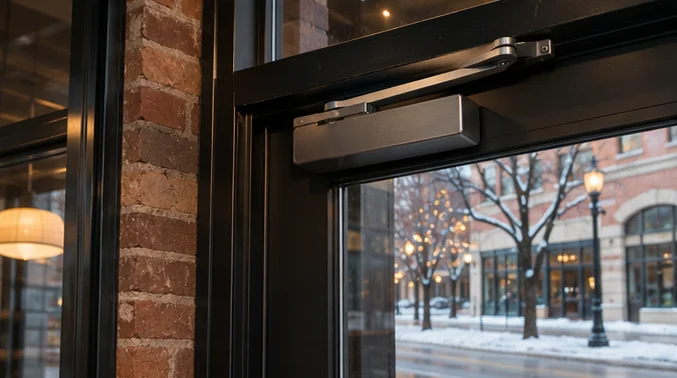
Specify closers, exit devices and mechanical storefront locks for the opening in use.
651-728-6900The right product depends on where a door leads, who uses it, whether it serves as an exit and which parts are already there. A retail front door on a busy block and a staff-only suite door can have similar metal trim and very different requirements. Confirm the opening and function before choosing a part number.
A door that bangs shut at a loading entry and a storefront latch that fails in cold weather may need different hardware. Use the entire opening to identify a match. Give us the door and frame material, existing hardware markings, how the door is used and who is responsible for its operation.
Describe when it fails. Include door swing, a photo of the edge and what the existing handle does. A frame or alignment problem may affect a new part too.
Look at the mounting pattern, hinge side and how it closes with wind or different pressure between rooms. Confirm who controls the opening.
Identify the current device and whether other equipment depends on it. Have the property contact check what function and exiting arrangements must be maintained.
A family to check when a commercial door has an existing mortise pocket. Confirm function, cylinder, trim and door preparation. A matching faceplate alone is insufficient to identify a fit.
Consider the exact series when working with narrow-stile aluminum storefront doors. Latch geometry, handing and existing cutouts are part of matching the opening.
Review when the existing opening uses an Adams Rite deadlock. Determine how the opening is used and check the existing model and compatible trim before selecting a replacement.
These families serve different openings and trim arrangements. The opening’s use, mounting and required exiting operation help determine whether either family is appropriate.
Consider when an opening needs an exit device with local alarm functionality. Verify the door application and building requirements with the responsible site contact.
Compare closers based on the mounting pattern, door, opening force requirements and traffic rather than finish alone. A heavy public entry and a lighter interior door can require different solutions.
Call to confirm the model, fit and current availability.
Send a full view of the door, the edge or labels and the installed hardware. A pair of doors, an exterior door exposed to air pressure and an interior door with frequent foot traffic can call for different work.
For a tenant opening, establish whether the tenant or building manager controls the closer, exit device and cylinder. If the opening is part of a required exit or a larger access system, include the person responsible for it.
Once work is complete, check that an ordinary user can enter, exit and close the door appropriately. Record the confirmed hardware and which door it belongs to for the property file.
Label the opening by the name the property uses. Take a full photo on each side, then a view of the edge, frame and closer. Include model labels where visible. In a downtown building, confirm whether to use a public lobby, freight entrance or tenant office and when the entrance can be inspected.
An item may depend on the right lever, cylinder, strike or mounting bracket. Ask what is included so the visit is planned around the complete opening. After work, have the property contact check entry, proper closing and the expected operation of the exit from inside. Keep the details with the door record.
Commercial Locksmith · Von Duprin 55 Series · More product categories
The brand is a starting point. Model, mounting, door size and existing holes can affect the match. A photo showing the whole opening is useful.
Confirm who controls the lock, frame and any common-area systems before committing to a change. Put the approving contact on the request.
They serve different functions. Identify how the door needs to operate from both sides and who is responsible for its intended use.
We can start with the type of door or system you have and what needs to change.