

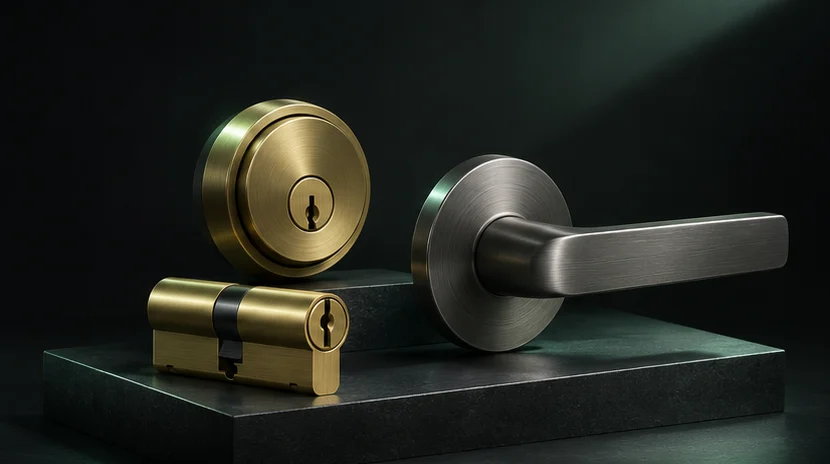
Start with the people who should have keys
After closing on a South Minneapolis house or taking over a new storefront, your list of people with old keys might be incomplete. Rekeying changes what key a compatible lock accepts while letting you keep useful hardware and trim. Go around the property and list the openings you actually use: the side kitchen door, the front door, the garage service entry and any keyed door between a vestibule and the business.
Make a second list of who needs access and what each person needs to open. A house sitter may only need the front entry. In a commercial building, a cleaner, property manager and employee may each have different permissions. For a condo or rental, ask for the management agreement on locks before deciding. A common building entrance may have a key system that remains under building control even if you can arrange work on your unit.
When keeping the lock makes sense
If the lock opens smoothly and has a serviceable cylinder, changing its key may solve the problem. Report any sticking, paint around the cylinder, missing screws or loose handles before booking. Trouble that occurs only when the door is shut deserves its own look. A tight fit at the strike can remain after a key change, and a worn latch may need repair or replacement regardless of who carries a key.
A lock can be replaced and keyed to a plan when its condition calls for it. For a mixed set of older deadbolts, take a picture of each exterior face and key if you have it. Some doors may use several different manufacturers or even the same brand with incompatible cylinders. Confirm which can be made to work together and whether a change would sacrifice an original handle or decorative plate you want to keep.
One key for the house, separate keys for specific rooms
It can be convenient to carry one key for the back and front of the house. In a rental duplex, separate tenant entries and a shared utility room require a deliberate plan. Before approving work, decide which openings should share a key and which should stay separate. Shared access is easiest to manage when you can describe it in plain terms and know where the spare keys are held.
An office with multiple suites may need a more formal key plan. Record the individual doors and show what a supervisor, contractor or neighboring tenant can access. Check any existing master-key or restricted-key system before ordering parts. If a door belongs to a larger building hierarchy, the property manager can coordinate with its own approved provider and tell you what authority is required to change a cylinder.
Decide when the older key should stop working
For a handover, schedule the rekey around when the previous tenant, owner or vendor is no longer entitled to entry. Decide who can meet before and after the work and where the new keys will be handed over. If a contractor is still finishing renovations, a temporary access arrangement may matter more than having every locksmith task handled on the same day.
If a key went missing along with an address or a business identification tag, disclose that while arranging service. Tell us where it was lost, how many people or doors it affects, and what must keep operating in the meantime. When locks are changed at a business, coordinate so people who should be able to enter can still reach the building. Maintain an exit route and follow the building's process for communicating a change.
The conditions that change the visit
The number of cylinders, how many compatible groups are needed, extra copies and the condition of existing hardware influence the estimate. A double-cylinder deadbolt has a cylinder on each side, which can affect the count. A small side entry might have two separate keyed parts even if there is one door. Send a few labeled pictures, especially when asking about several doors or properties at once.
In winter, an exterior door near a back alley might need time to check its normal alignment at the temperature when it tends to bind. A photo of the complete opening can be as useful as a close-up of the cylinder. Parking can also be tight near a downtown office or a shared driveway. Identify the entrance, show where contractors are normally admitted and tell us who can sign off.
Leave with a record you can use
Once finished, check each lock both open and closed and test the key set that now belongs to it. Record which keys go together, how many copies were delivered and who received them. On a set of commercial openings, give the record to the property contact. At home, a plain internal note is enough to remember which key you set aside until the next time a relative needs it.
If a smart lock is also involved, ask what change happens to its mechanical override and review how guest access is managed. Rekeying a mechanical cylinder deals with the key at that cylinder. Digital codes or account transfer may need a separate step with the manufacturer or property manager. For a newly purchased property, do both reviews at a time when someone can check every intended route of access.
Make the second visit easier to avoid
List the garage, storage, side gate or second entry if they are part of the same request. Ask the building contact about doors you are unsure you control. A clear list helps identify what can be done in one visit and which parts require a different plan. If you want fewer keys, say what combination you would find genuinely convenient. For an older working lock you like, mention that keeping the finish and trim matters to you.
Frequently asked questions
- Will my old key still work afterward?
A rekey changes which key a serviced cylinder accepts. Ask which locks were included and test the new keys while the work can still be checked.
- Can every lock be rekeyed to the same key?
The cylinder and keyway have to be compatible. Share the number of doors and pictures of existing hardware so the options can be compared.
- How many keys should I request?
Count the people who need access, consider a spare kept somewhere secure, and confirm key-copy or management requirements for the property.
- Does the door need to be working already?
Tell us about binding, broken trim or stiff handles when booking. That may change the work from a key change alone to an adjustment or replacement.